What an art direction portfolio should explain about the work
Show studios what you owned, which constraints shaped your decisions, and how collaborators contributed through clear case studies and honest credits.
THE SHORT ANSWER
An art direction portfolio should explain your responsibility, the constraints behind the work, the decisions you influenced, and the contributions of other people. Pair selected visuals with precise captions and evidence of your direction. A studio should be able to distinguish what you made, what you directed, and what the team achieved together without guessing.
Establish your scope before showing the gallery
A polished image gives a studio something to judge visually. It leaves responsibility unresolved. Did you establish the visual direction, inherit an existing style, produce the concept, or supervise its execution? My recommendation is to answer that question near the first image, where it can guide the reading of everything that follows.
Open each case study with the project, organization, role, and scope of responsibility. Separate the formal job title from the work you actually covered. Add the relevant development stage when it is public and accurate: exploration, production, or a limited contribution. Someone who joined after the visual foundation existed should make that boundary explicit.
My documented scope on Sword of Rule at Rawa Games includes visual development, concept art, character and environment direction, UI/UX, the art pipeline, and outsource artists. That breadth establishes the areas of responsibility; it does not establish authorship of every displayed asset. Individual images still need attribution. The project context is available in the [Sword of Rule portfolio entry](https://ziadeltoukhy.com/#rawa).
Explain which constraints made the decisions necessary
An attractive result becomes more useful evidence when the reader understands the problem it had to solve. State the constraints that materially shaped your contribution: viewing distance, target platform, an established brand, available production capacity, or compatibility with existing assets. Include only constraints you can substantiate and disclose.
Then connect a constraint to a choice. Explain what you prioritized, what you accepted as a compromise, and where your authority ended. A sentence about a specific tradeoff carries more information than a paragraph claiming that the work was innovative or cohesive. Avoid attaching a technical justification retrospectively to a choice that was primarily aesthetic.
ArtStation and ImagineFX's portfolio guide recommends selecting strong work and presenting it clearly. My extension for a direction portfolio is to select images that also make a decision inspectable. One well-captioned comparison can give a reviewer a better basis for questioning your judgment than several nearly identical beauty shots. See [Killer Portfolio Tips](https://magazine.artstation.com/wp-content/uploads/2017/09/ArtStation_ImagineFX.pdf).
Worked example: turn a shared scene into clear evidence
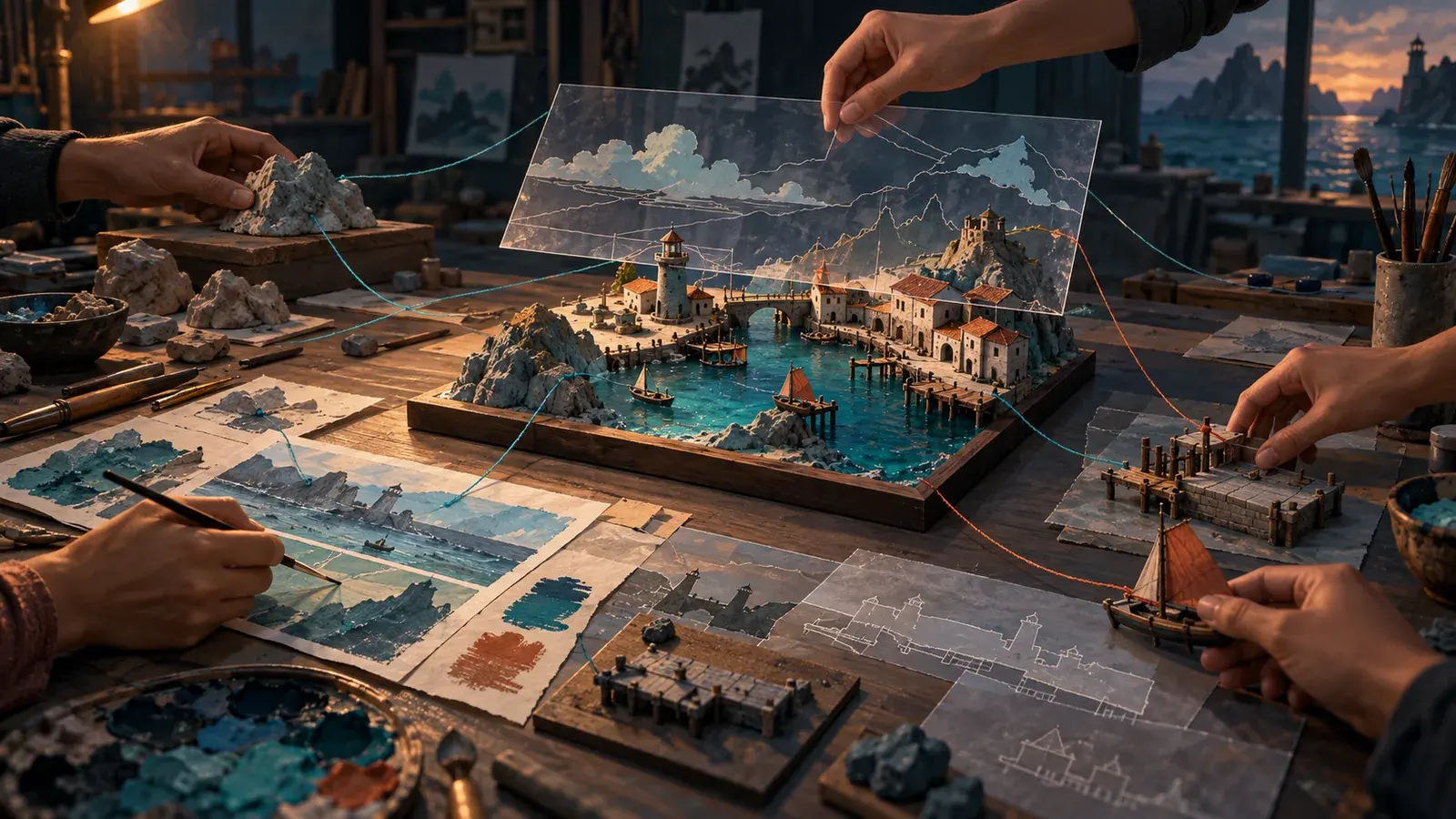
Consider this explicitly hypothetical example: an art director presents a harbor scene from an imaginary exploration game. Two artists produced the environment, another created the boat concepts, and the director established the visual priorities and selected the approved direction. The scene is a production milestone, with no player research available.
The weak caption is “My harbor environment.” A clearer caption would explain: “Art direction for the harbor scene. I established the visual priorities and selected the boat concept for production. Environment execution by the two environment artists; boat concepts by the concept artist.” In an actual portfolio, replace those descriptions with verified names or accurate studio credits.
The case study could show the approved concept beside the milestone scene and explain one decision: the boat needed a distinct outline because it was the destination within the harbor. State that this was the design intention. Without supporting evidence, do not claim that players found it faster. The example demonstrates responsibility, collaboration, and reasoning without inventing a measured outcome.
Give studios evidence they can question
Before publishing, read the page as someone considering you for a specific responsibility. Can they identify what you owned, find a decision worth discussing, and distinguish your contribution from the finished team's work? If the answers require an interview, add the missing context now.
Keep the claims proportional to the evidence. A concept demonstrates a proposed direction; an integrated scene demonstrates an implementation. Neither alone proves commercial success or player understanding. Label exploration, production work, and personal exercises accurately. Where material cannot be shared, describe the permitted scope without suggesting that unavailable evidence proves the claim.
For an Egyptian art director working across studios and platforms, this precision makes the work legible beyond a familiar local network. Concrete responsibilities and honest credits let a prospective collaborator assess the same evidence wherever they are. The portfolio should leave them with useful questions about your decisions and a clear understanding of whose work they are seeing.
Key takeaways
- State your role and actual scope beside the first project image.
- Connect a documented constraint to one specific decision or tradeoff.
- Distinguish assets you created from work you directed or approved.
- Place verified collaborator credits beside the relevant visuals.
- Label development stages and design intentions without implying unverified outcomes.