Review character silhouettes before adding detail
A practical thumbnail exercise for reviewing character silhouettes, separating shape families, and giving feedback at gameplay distance.
THE SHORT ANSWER
Review characters as solid shapes at their intended gameplay size before approving surface detail. The exercise should reveal whether role, posture, and identity survive without color or decoration.
Start with the outline the player will see
The short answer: reduce each character to a solid silhouette, display it at its expected gameplay size, and ask what remains recognizable. Review the contour, posture, and major masses before spending time on costume seams or material treatment. A detailed drawing can be attractive while its useful distinctions disappear during play.
This review needs a specific question. Are you trying to distinguish enemy roles, identify a protagonist among companions, or make equipment changes visible? Those demands lead to different decisions. Write the recognition task beside the thumbnails so the conversation does not drift into general preferences about anatomy or fashion.
Ziad El Toukhy’s documented role on Sword of Rule includes character direction and concept art. That establishes a relevant project context for discussing character readability; the exercise described here is a recommendation, rather than a claim about the review methods used on that project.
Build a thumbnail sheet with fair comparisons
Place candidates on one sheet using a consistent presentation: the same background, comparable camera angles, and the same scale rule. Preserve intended differences in height. Equalizing every character’s bounding box can conceal a useful size distinction or make a small character appear artificially imposing. Include the expected gameplay size beside a larger diagnostic view.
Fill each figure with a single dark value. Remove interior lines, colored accents, lighting, and decorative effects. Use a representative pose rather than a dramatic pose chosen solely to improve the outline. If characters rotate during play, include the views that matter most; a convincing front view does not settle the side-view question.
First inspect the sheet with names hidden. Describe visible differences without explaining the design intention. Then restore the labels and compare intention with observation. A short mismatch such as ‘intended as agile, reads as heavy’ gives the next revision a more useful target than a long discussion about whether the drawing feels exciting.
Use shape families as structural commitments
A shape family is a recurring relationship among major forms: broad upper bodies, narrow vertical forms, low horizontal masses, or a characteristic curve. Treat it as a structural commitment, not a rule that every part must repeat a triangle or circle. Excessive repetition can flatten the character into a symbol with little personality.
Separate characters through more than one cue when their recognition matters. Height, width distribution, negative space, head placement, and equipment position can work together. A tiny hat ornament is fragile evidence. A clear shoulder mass combined with a distinctive stance offers more opportunities for recognition when part of the figure is obscured.
Shared shapes can still communicate affiliation. Members of one faction might share a compact torso while differing in limb length and equipment placement. The review should distinguish deliberate resemblance from accidental duplication. Ask which similarities identify the group and which differences identify the individual role.
An illustrative exercise: separate three combat roles
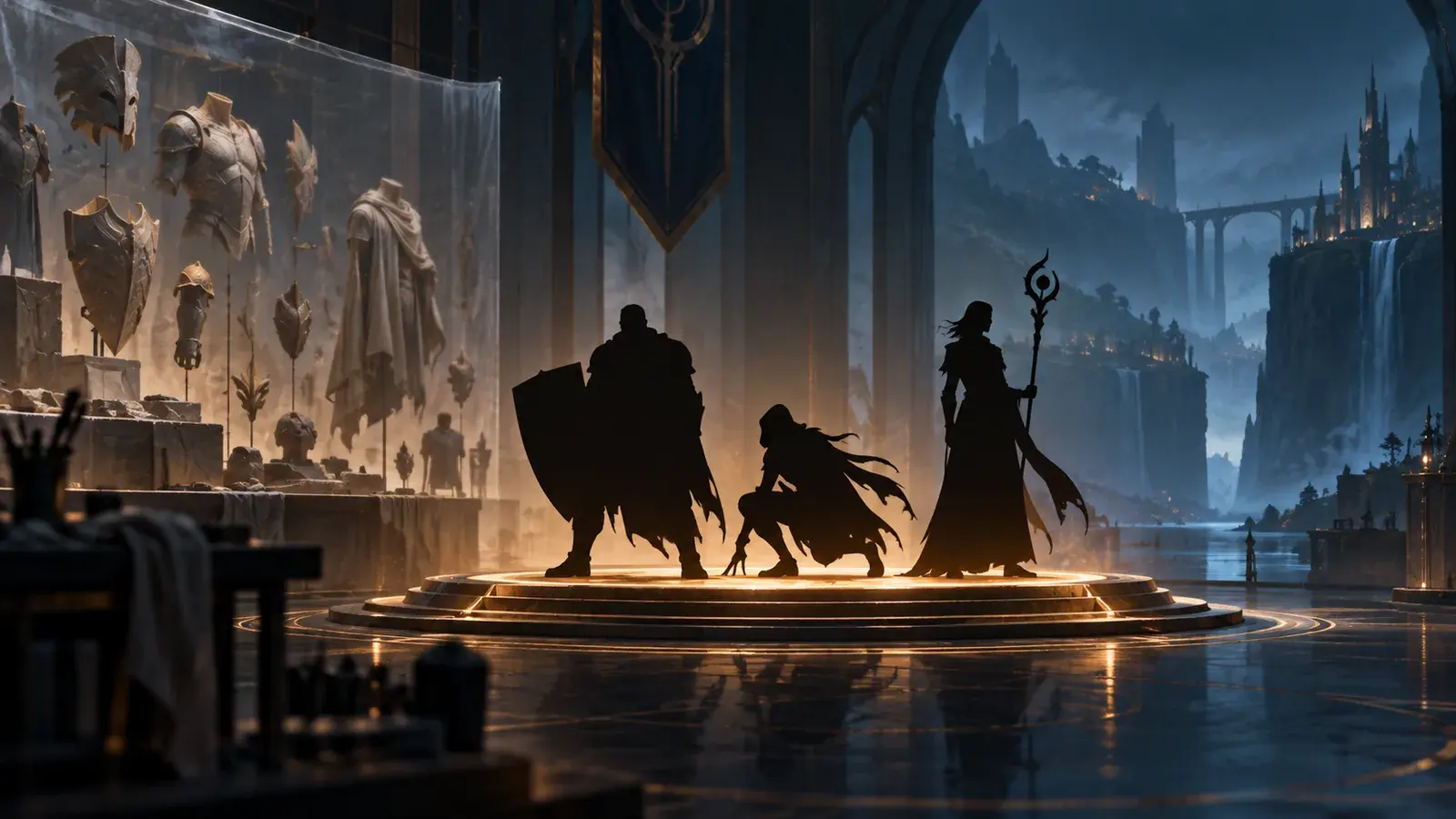
Consider a hypothetical game with a defender, a scout, and a ranged caster. All three initial concepts have wide coats and tall staffs. On the silhouette sheet, they read as three variations of one role. This is an illustrative design problem, not a description of a published project or a measured player response.
Give the defender a lower, broader mass and equipment held close to the body. Give the scout a narrower torso with visible space between arms and waist. Let the caster retain the vertical staff, but move it away from the torso so its outline remains distinct. Keep the shared coat construction if it supports their affiliation.
Now compare the revised figures at gameplay size and in a plausible overlapping arrangement. If the scout’s distinguishing gap closes in the representative pose, adjust the pose or underlying proportions. Feedback can be precise: ‘Keep the narrow torso; increase the arm-to-waist gap in the idle pose.’ That instruction names the preserved decision and the required change.
Approve the structure before approving decoration
End the review with a decision for each character: structurally ready, needs a defined correction, or needs another alternative. Record the recognition task, the relevant view, and the contour change requested. Avoid turning every observation into a mandatory revision; some similarities are acceptable because the characters never need to be distinguished in the same situation.
After detail is added, repeat the small-size comparison. Lighting, equipment, and animation can alter the effective silhouette. The original approval remains useful evidence, but the integrated character must still serve the recognition task. A successful review leaves the artist with a clear structural target and permission to develop detail inside it.
Key takeaways
- Define the recognition task before comparing character designs.
- Review solid silhouettes at gameplay size using consistent views and honest scale.
- Support important distinctions with multiple structural cues.
- Write feedback that names both the feature to preserve and the contour to change.